The Montessori Method
Introduction
About the Montessori Method
The Maria Montessori method is an educational approach that puts the child at the center of learning. It encourages independence, freedom of choice, and learning through play.
Created in the early 20th century, this method is successfully applied worldwide and proves that children learn the most when they follow their natural curiosity.
Maria Montessori
Who is she
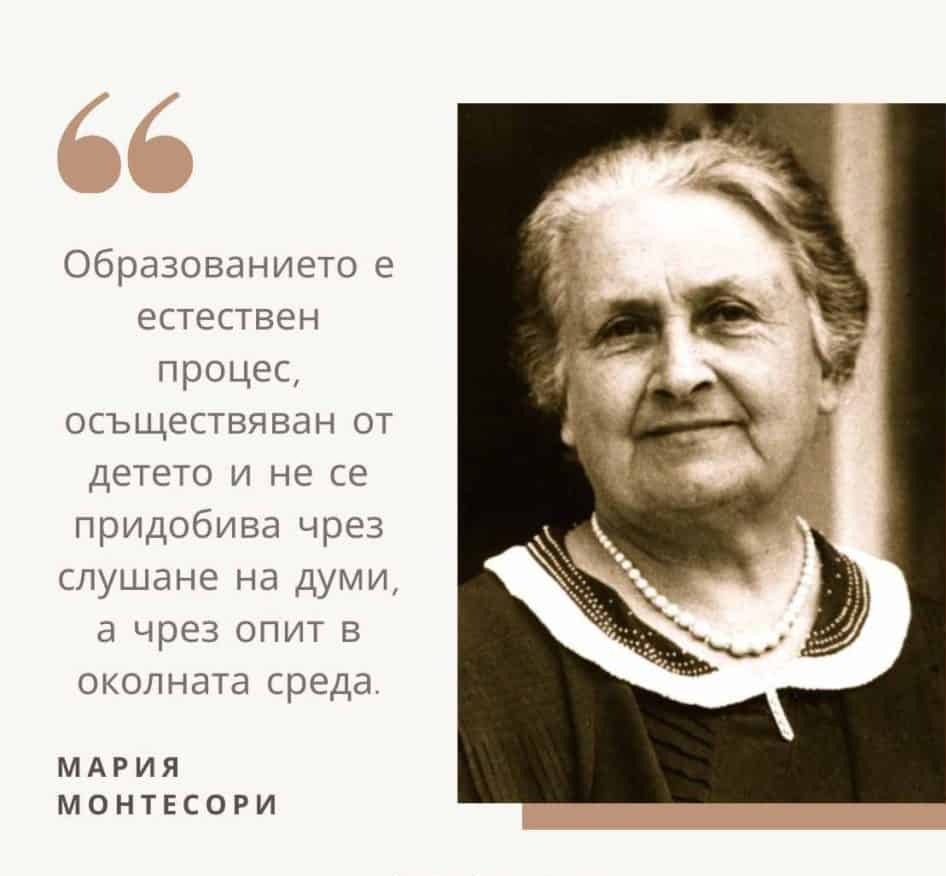
Maria Montessori (1870–1952) was an Italian physician, educator, and innovator who changed the way the world understands child development and education.
She was one of the first women in the world to graduate in medicine — an achievement that required extraordinary determination and courage at the time. Early in her career, she worked with children with special educational needs, where she noticed something remarkably important — children learn best not through coercion, but through active participation and their own experience.
These observations led her to create an entirely new educational approach. In 1907, she founded the first “Casa dei Bambini” (“Children’s House”) — a place where she put her ideas into practice.
In principle and in practice, Dr. Montessori offers strong hope that humanity will be able to build peace and progress in the world on the strongest foundation, namely — the free and democratic education of the children.
Philosophy
- Every child is born with a natural drive for development
- Learning should follow inner motivation, not external pressure
- The environment plays a key role in learning
- Freedom and discipline go hand in hand
Core Principles
How the Method Works
Child-Centered
Learning follows the rhythm and interests of the child
Practice
Learning through action and experience
Freedom
Freedom within clear boundaries
Environment
A prepared environment for development
Our Choice
Why "Paletchka" Nursery Chose Montessori
At "Paletchka", we believe every child is unique. The Montessori method allows us to respect each child's individuality.
Learn more about us